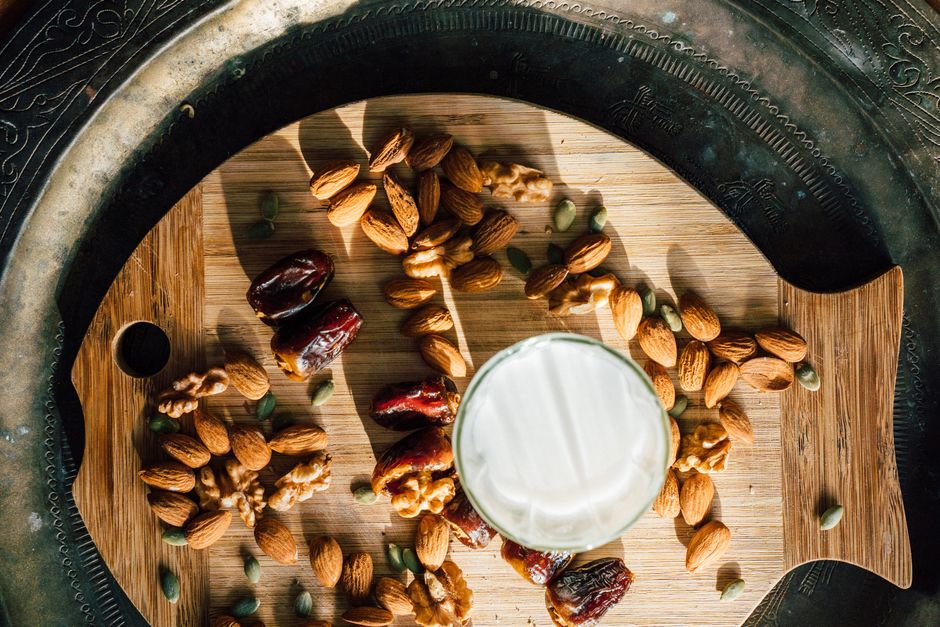
The Protein in Nuts and Seeds: Don't Treat Them as Just a Snack
Beyond healthy fats, nuts and seeds also deliver meaningful amounts of protein and minerals — worked into meals in moderation, they're a valuable addition to a vegetarian protein lineup.
Protein Content in Nuts and Seeds (per 100 g)
- Pumpkin seeds: about 30 g protein, also rich in zinc and magnesium
- Peanuts: about 25 g protein, great value for money
- Almonds: about 21 g protein, decent calcium content too
- Sunflower seeds: about 21 g protein
- Walnuts: about 15 g protein, notable for omega-3 fatty acids
- Cashews: about 18 g protein, also a good source of iron
Why They're More Than Just a Snack
A small handful (about 25-30 g) of nuts or seeds provides roughly 6 to 9 grams of protein, along with zinc, magnesium, and vitamin E — nutrients that vegetarians can easily run short on. Sprinkling nuts into salads and oatmeal, or tossing them into a stir-fry, makes it easier to keep portions in check and easier for the body to put them to use, compared with mindlessly snacking on them.
A Few Things to Watch For
Nuts are calorie-dense, so it's best to stick to about a small handful (25-30 g) a day to avoid excess fat and calories. Choose plain varieties with little added salt or oil, and go easy on deep-fried or heavily salted ones. Once opened, nuts absorb moisture and oxidize easily, turning stale — store them sealed in the refrigerator, and buying smaller packages rather than large bags makes it easier to keep them fresh.
Related reading

Common Vegetarian Protein Myths: Eating Enough but Seeing No Results?

Vegetarian Protein Absorption: How Fermenting, Sprouting, and Cooking Change the Picture

Choosing a Plant Protein Powder: Pea, Soy, and Rice Protein Compared
