Pumpkin Seed
Pumpkin seeds are the flat, crunchy seeds dried from inside a pumpkin, and their high zinc content makes them a natural choice for vegetarians looking to boost their zinc intake.
Nutrition
Per 100 grams, pumpkin seeds contain about 49 grams of fat and 30 grams of protein, along with zinc and magnesium. Their zinc content is especially notable among nuts and seeds, making them a relatively rare natural source of zinc in a plant-based diet.
How to Choose
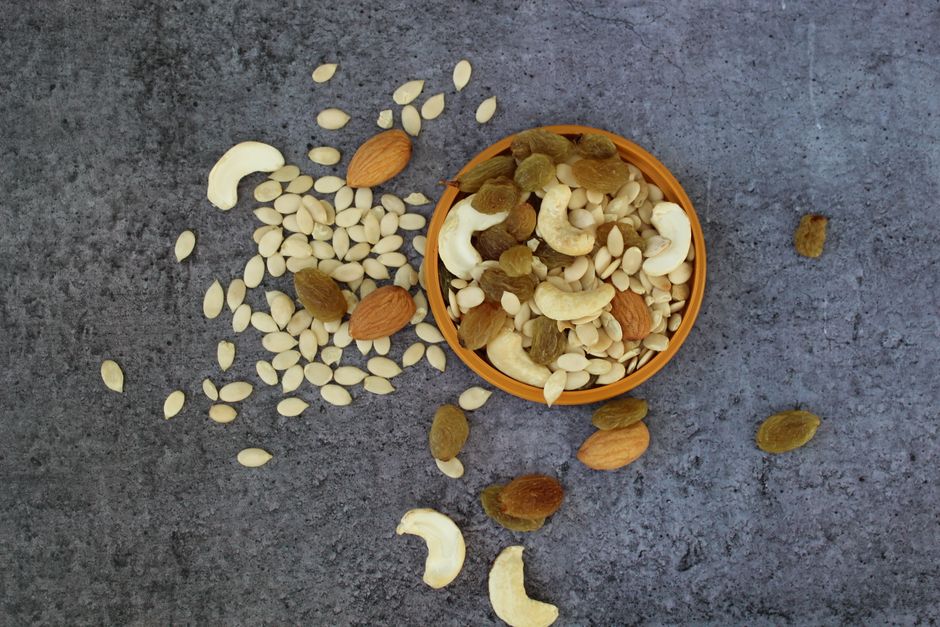
Good pumpkin seeds are plump and uniform, naturally dark green or pale yellow in color, with a mild oily aroma and no rancid smell. Shelled pumpkin seed kernels should be an even green — avoid ones that look yellowed, dull, or heavily broken.
Cooking
Pumpkin seed kernels can be eaten straight as a snack or sprinkled over salads, oatmeal, or baked goods for extra texture and nutrition. Whole seeds in the shell can be washed, dried, and roasted at a low temperature for about 15 minutes, then lightly salted for a simple homemade snack.
Storage
Pumpkin seed kernels are fairly high in oil, so seal and refrigerate them to slow oxidation — they'll keep for 2 to 3 months this way. Seeds still in the shell can be stored at room temperature in a cool, dry place for longer.
Tips
When roasting pumpkin seeds at home, soak the washed, dried seeds briefly in lightly salted water before roasting so the salt penetrates the shell more evenly. Crushed pumpkin seed kernels sprinkled over vegetable soup or salad add a pleasant textural layer, and their mild nutty aroma pairs especially well with pumpkin and other squash — a simple, practical way to boost nutrition.