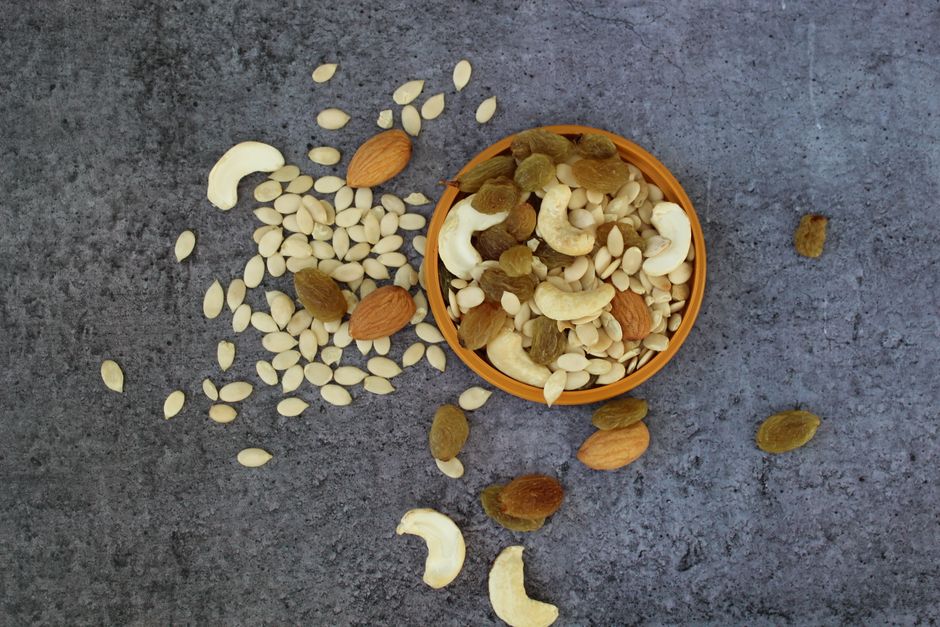
Peanut
Peanuts, whose flowers famously bury themselves underground to form pods as they mature, are crunchy and rich in oil — a staple nut across Chinese cold dishes, braises, and cooking oil.
Nutrition
Per 100 grams, peanuts contain about 49 grams of fat and 25 grams of protein, along with resveratrol, vitamin E, and other antioxidants — an excellent-value source of plant protein and quality fat. The thin red skin is also rich in iron and polyphenols.
How to Choose
Good peanuts are plump and uniform, with intact, undamaged shells that give a crisp rattle when shaken. The kernels should have a natural color with no mold spots or black marks — be especially wary of moldy peanuts, which can produce aflatoxin and must never be eaten.
Cooking
Peanuts can be boiled, deep-fried, roasted, or simmered with adzuki beans and glutinous rice for dessert, and they're often crushed and sprinkled over cold dishes and salads for crunch and flavor. Peanuts are also a common addition to nourishing vegetarian soups, lending a rich, savory depth.
Storage
Peanuts are high in oil and prone to moisture and mold, so store them sealed in a cool, dry place — refrigerating or freezing extends their freshness even further. Discard immediately at the first sign of mold, bitterness, or off odors; never eat peanuts that show these signs.
Tips
The thin red skin on peanuts shouldn't be overlooked — it's rich in polyphenols, and traditional food therapy considers it beneficial for circulation, so leave it on if the texture doesn't bother you. Boiling peanuts with star anise, cassia bark, and other spices deepens their flavor, making a classic cold appetizer and drinking snack found on many regional tables.