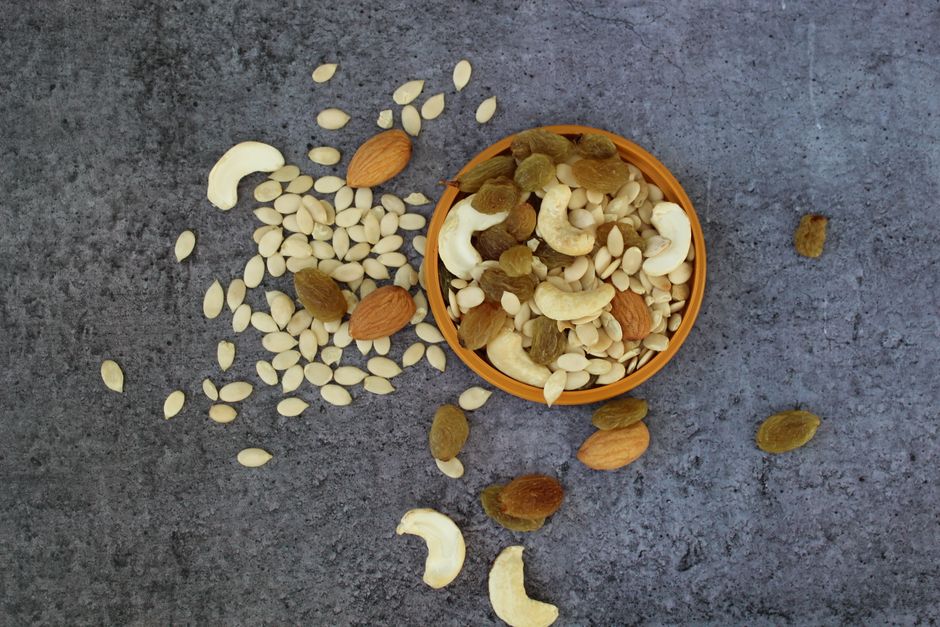
Almond
Almonds — known in Chinese as badanmu to distinguish them from apricot kernels (xingren) — are grown in Xinjiang and elsewhere, with a crunchy texture and mild sweetness that make them one of the world's most popular snacking nuts.
Nutrition
Per 100 grams, almonds contain about 50 grams of fat, 21 grams of protein, and 12 grams of dietary fiber, along with vitamin E and magnesium. Their vitamin E content is especially notable among nuts, and almonds are frequently mentioned in diets aimed at skin health.
How to Choose
Good almonds are plump and uniform, light brown, with clearly visible surface ridges and a mild nutty aroma with no rancid smell. Be sure to distinguish between raw, roasted, and flavored products when buying — plain raw almonds are best for cooking, blending, or making almond milk.
Cooking
Almonds can be eaten straight as a snack, or sliced and sprinkled over salads and baked goods for texture. Soaking whole almonds, removing the skins, and blending them is the standard method for homemade almond milk, which turns out silky and full of nutty aroma.
Storage
Almonds are high in oil, so seal and refrigerate or freeze them to slow oxidation — they'll keep for six months or longer this way. At room temperature, store them away from light and moisture and use within 2 to 3 months.
Tips
Almonds taste slightly different with the skin on versus off: skin-on almonds retain more dietary fiber and polyphenols, while skinned almonds have a smoother texture, making them better suited to blending into almond milk and similar drinks. When buying almonds still in the shell, check for cracks or insect damage — an intact, hard shell better protects the kernel from oxidation and contamination.